

Human-Centered Research & Early-Stage Concept Development
We are at the beginning of a new era in how humans relate to machines. Not an upgrade cycle. Not a feature expansion. A fundamental shift in the nature of the interface. We are moving from screens we look at to intelligence we build relationships with over time. The companies that get this right won’t just win a product category. They’ll define what it means to have a personal AI.
Amazon is positioned to lead that shift. Their device ecosystem already reaches hundreds of millions of homes worldwide. The peronsal AI market sits at over $40 billion today and is projected to exceed $160 billion by 2029, growing at roughly 30% annually.  The interaction paradigm being designed right now, how the AI listens, responds, remembers, and earns trust in the most personal contexts, is shaping the next decade of consumer technology. Amazon’s Devices team knows this. When they needed to explore what that future actually looks like for real people, they called me.
Amazon Wearable AI Strategy & Design
Services
Human-centered insights
Experience strategy
Concept development
Hardware design
Contributors
Natalie Torres
Sarah Bernstein
Yi Pan
Rem Reynolds
Project Outcomes
30+
Deep dive research participants
6
Product strategic experience territories
20+
Hardware
directions
5
Products distinct in development
Research & Innovation Cycle



Human-AI Relationships
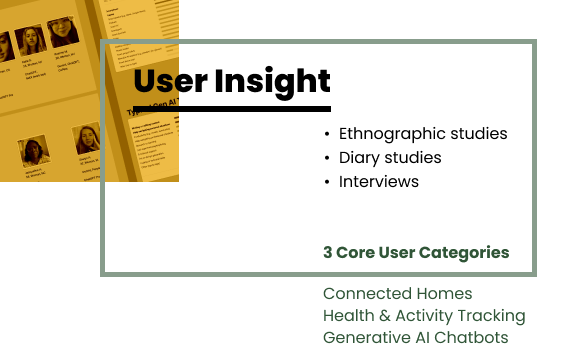
My role spanned the full arc of early-stage research and product development. Through ethnographic and diary studies with highly engaged digital users across three categories (connected home, activity trackers and wearables, and generative AI chatbots). We mapped current need states, where existing products were falling short, and how users’ mental models opened or closed doors to new kinds of human-AI interaction. The goal wasn’t to ask what people wanted. It was to understand how they thought, where friction lived, and what the adjacent possible actually looked like.
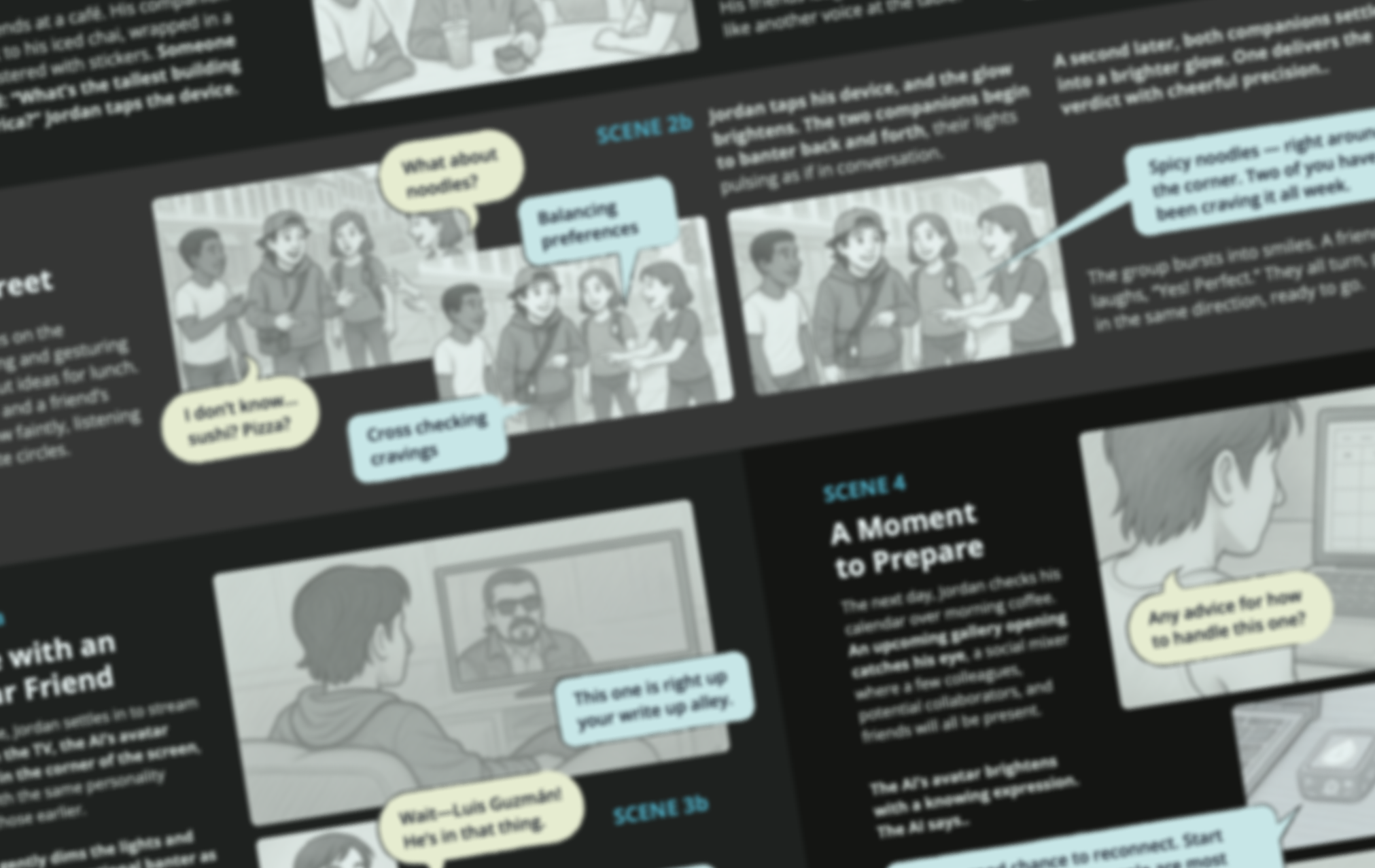
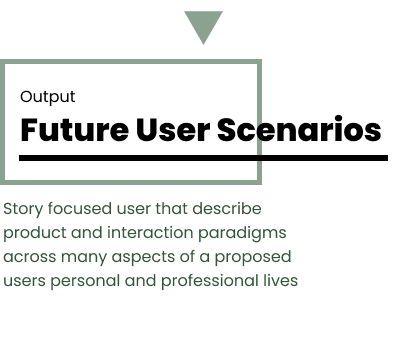
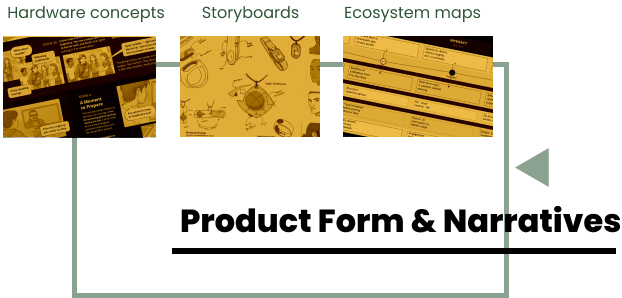
From that research, we developed six product concept territories; each grounded in human insight, each built around a conversational AI interface, and each with a distinct value proposition across personal, professional, and health dimensions. I designed multiple form factors and built out full concept narratives, weaving together need states, human stories, small frictions, and the moments where a product earns its place in someone’s life.
This type of work easily dissembles when run by siloed “expert” teams. The aspects of the solution space being handled in separate work streams instead of developed in an integrated and interdependent manner. When the research and insight team hands off to the concept group who hands off to the designers, nuance disappears and the human truth gets lost. I hold all of it in the same frame — which is why the concepts that came out of this process were legible to researchers, meaningful to designers, and actionable for senior product leaders.
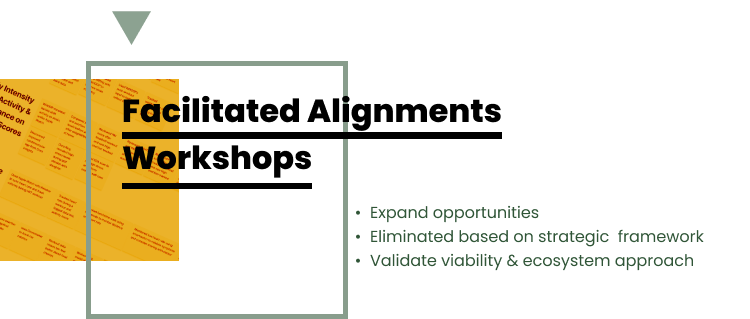
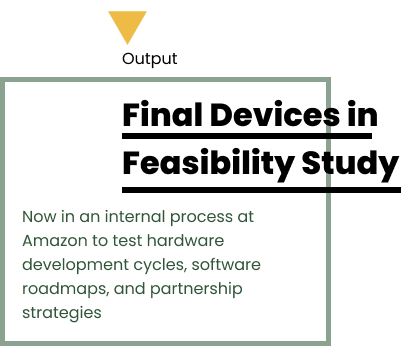
I led cross-functional facilitation sessions with those leaders, across service, product, and category, to validate, expand, and eliminate directions. We landed on five territories, each developed with user scenarios, storyboards, ecosystem interaction maps, and moments of both barrier and delight. That work is now in feasibility testing and user validation inside Amazon’s early-stage product development cycle.
The stakes couldn’t be more real. The product directions developed in this engagement have the potential to influence how hundreds of millions of users experience AI in their most personal contexts; on their bodies, in their homes, in the rhythms of daily life. The people I worked with are among the most senior in consumer product development in the industry. This isn’t a speculative exercise. It’s the beginning of the roadmap.